So you’ve got a website and you know what to say, but how do you say it in a way that both human readers and search engines will love? The answer is SEO keyword research!
SEO keyword research matters because it’s what helps your webpages rank on search engines. When your pages rank high, more people will find them and more people will visit your website.

What is SEO keyword research?
At its core, SEO keyword research reveals what people are searching for online. For you, that helps you to create pages that are genuinely useful to your customers, and, for your customer, it helps them to quickly find the answer to their search query.
Think about when you’re searching on Google. Do you go beyond page one or two of the search results? Hardly ever, right?
In fact, 70-75% of users never scroll past the first page of search results (Source: Hubspot). This just shows how important the right keywords are for helping people to find your content and why you should be including them on every page of your website.
Read on for my beginner’s guide to keyword research and learn how to apply them to your website.
What keywords should I use?
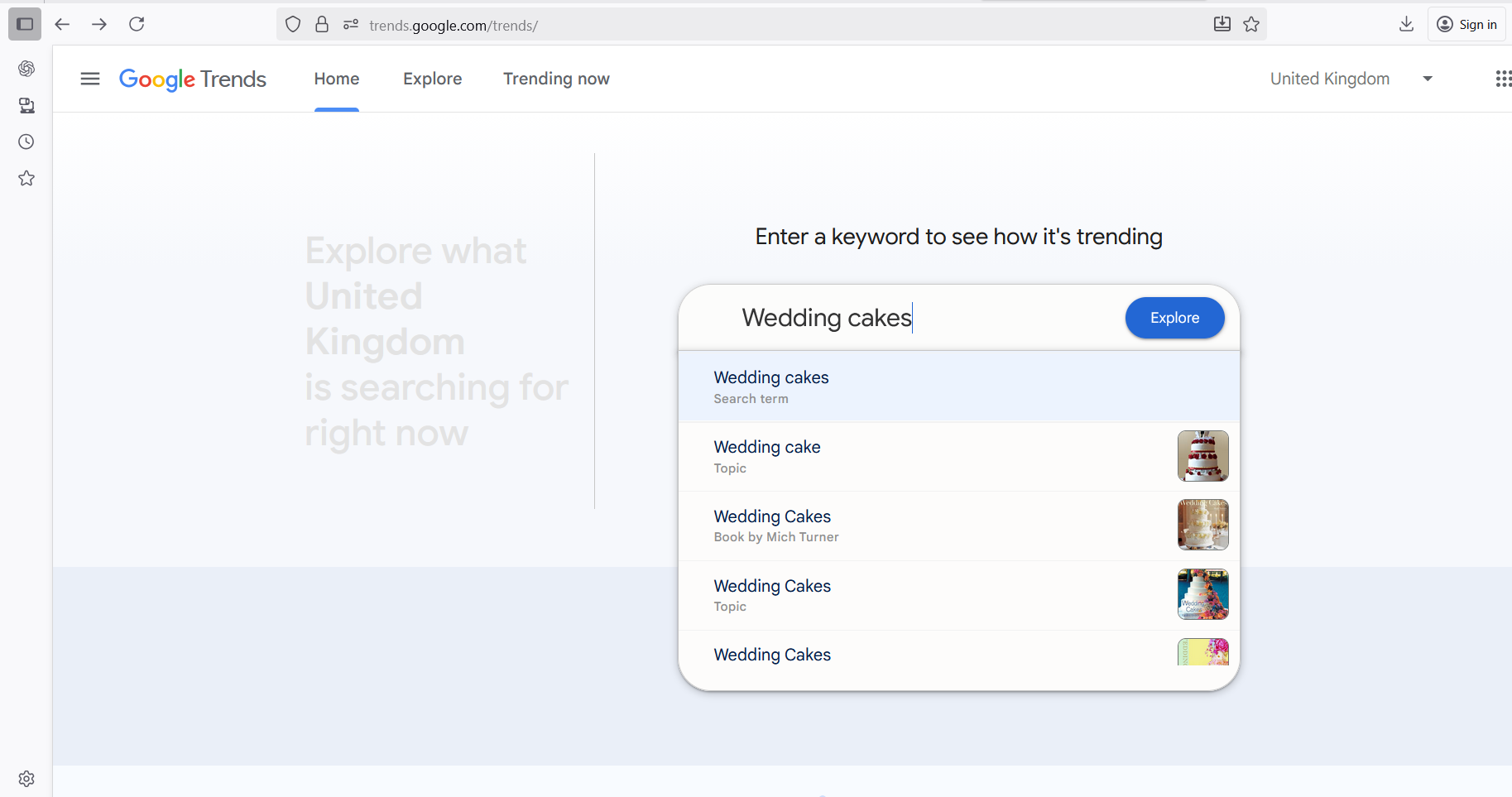
How do you know what keywords to use? It all begins with SEO keyword research. First, jot down every word that comes to mind about your product or service, then use tools like Google Trends or Answer The Public to see what people are already searching for online.
For more in-depth research, you can use Google Keyword Planner to generate hundreds of keywords relating to your business. You’ll be able to download a list and sort them by search volume and competition to discover the best options. Check out YouTube for lots of handy tutorials on this!
Paid tools like Semrush and Ahrefs, can provide even more insight into what people may be typing to discover your website. However, these aren’t really necessary when you’re just starting out.
Here’s an example of what your keyword research might reveal: Say you own a local wedding cake business. Keyword research might show that people in your local area are searching ‘wedding cakes near me’ more often than ‘custom wedding cakes’. Understanding this can help you to create web pages that align with real search trends.
Try these free tools for keyword ideas:
• Ahrefs
Creepy crawlers

Search engines use bots, known as crawlers, to ‘read’ your pages and understand what they’re about. Including relevant keywords helps those crawlers match your page with the right searches, meaning your content reaches the right people.
Think of crawlers like little detectives scouring your pages for information. If the detectives spot the keywords, they’ll know exactly what your website is about and tell other people (i.e. the search engines).
For example, if your page consistently mentions ‘wedding flowers’, crawlers will know it’s relevant to wedding floral services, not just general flowers. Crawlers also seek out other factors, like internal links and meta data.
Understanding how crawlers read your web pages can help you see why it’s important to carry out keyword research. The right terms will help your business connect with your intended customers.
Keyword mapping

Once you know how crawlers read your pages, the next step is to plan where to use each keyword with a keyword map.
It’s SEO best practice to assign one primary keyword and one or two secondary keywords per page. Use the primary keyword in the page title, header and opening paragraph and weave your secondary keywords naturally throughout your copy.
A key reason for creating a keyword map is to ensure that you’re not using the same keywords across multiple pages. This is known as cannibalisation, and it can actually negatively impact your website’s search rankings as Google won’t know which page to rank above the other.
I use a simple Excel spreadsheet to help organise my keywords, but there are lots of templates available online, including this one from Ahrefs.
How do I use keywords?

The most important thing to remember when using keywords is to use them naturally. There’s nothing worse than reading a webpage or blog post that is obviously stuffed with keywords. It’ll turn readers away and Google will penalise you for it.
Crucially, when using keywords, you should always write for your human readers. Weave them into the copy in a way that is natural, engaging and crystal clear.
It’s not just about ranking
SEO keyword research isn’t just about ranking on Google, it’s also about connecting with your audience and creating content that meets their needs. Start with a few key terms, use them naturally and it’ll give you the best chance at getting found online.
Want to discover the best keywords for your small business? Contact me today for a free SEO mini audit of your website.
